


Global Handwashing Day: Clean Hands, Healthier Communities, A Shared Responsibility
One simple habit. A world of difference.
Every day, millions of people perform one of the simplest acts of personal hygiene: washing their hands. It takes only a short time, requires little effort when the necessary facilities are available, and plays an important role in protecting health. Yet, for millions around the world, access to the basic necessities for proper handwashing remains a challenge.
Observed annually on 15 October, Global Handwashing Day raises awareness of the importance of washing hands with soap and encourages individuals, communities and institutions to make hand hygiene an everyday priority. Its message is simple but powerful: healthier communities begin with small, consistent actions.
Despite its importance, handwashing is not simply a matter of personal choice. People also need access to soap, water and suitable facilities, alongside the knowledge and opportunity to practise good hygiene consistently.
The Global Challenge: Access to Hygiene for Everyone
Progress towards better hygiene has been significant, but important gaps remain.
According to the WHO/UNICEF Joint Monitoring Programme, approximately 1.7 billion people lacked basic hygiene services at home in 2024. This included 611 million people who had no handwashing facility at all. Basic hygiene services are defined using the availability of a handwashing facility with both soap and water.
Children face particular challenges in educational settings. In 2025, an estimated 545 million school-age children lacked basic hygiene services at their schools, including access to handwashing facilities with soap and water. The same global monitoring found that 72% of schools had basic hygiene services, while 18% had no hygiene service.
In 2023, an estimated 8.22 million people died from infectious diseases globally, according to estimates from the Institute for Health Metrics and Evaluation, published by Our World in Data. The figure encompasses a wide range of infectious diseases, not all of which can be prevented through handwashing. Nevertheless, proper hand hygiene remains an important measure for reducing the transmission of certain infections. Lower respiratory infections alone claimed an estimated 2.7 million lives worldwide in 2023.
Homes, schools, healthcare facilities and public spaces all have a role to play in making hygiene accessible. Greater awareness must go hand in hand with reliable water supplies, soap, appropriate facilities and sustained community action.
Making Handwashing an Everyday Habit
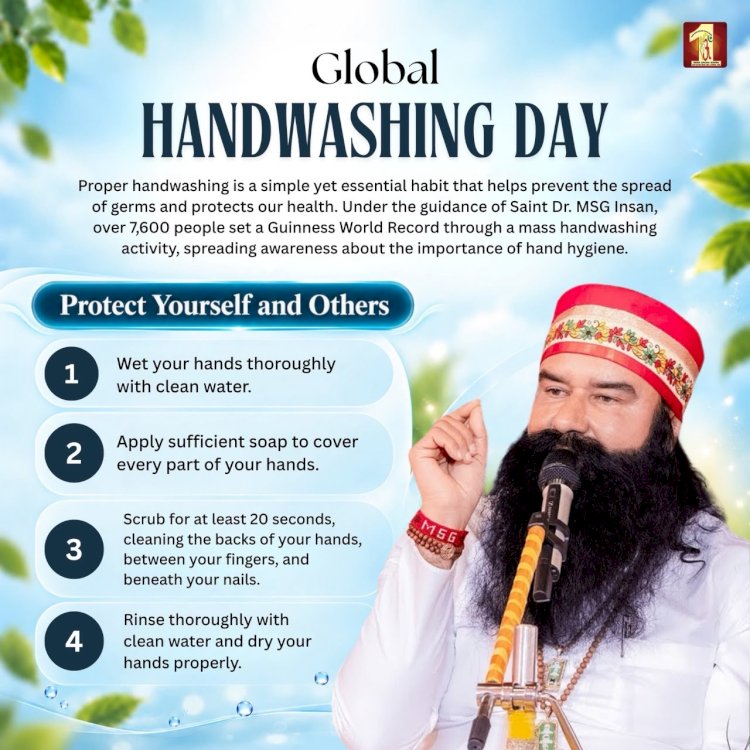
Effective hand hygiene does not have to be complicated. Simple, consistent practices can help make handwashing a natural part of daily life. Revered Saint Dr. MSG Ji, emphasises the importance of proper handwashing and guides devotees in following appropriate hygiene practices to help protect themselves and others.
When should we wash our hands?
How can we wash our hands effectively?
Revered Saint Dr. MSG Ji also offers guidance on alternatives for cleaning hands when soap and water are unavailable. He suggests using wet wipes, where available. If these are not available, rinsing hands with water is another option. Where neither is accessible, leaves found nearby may be used to clean the hands, as they are the natural cleaners, followed by clean sand if the other options are unavailable.
Children can be encouraged to develop these habits from an early age through positive examples, accessible facilities and regular reminders. Families, schools and workplaces can reinforce the message by making handwashing convenient and routine.
Beyond Personal Hygiene: Building Cleaner Communities
Handwashing is one important part of a much broader commitment to health and well-being. Clean surroundings, proper sanitation, responsible waste disposal and accessible hygiene facilities all contribute to environments in which people can better protect their health.
Community participation can help turn these principles into everyday practice. When individuals work together to maintain public spaces, encourage responsible behaviour and support local cleanliness efforts, they help strengthen a shared culture of care and responsibility.
This wider perspective is reflected in the cleanliness and sanitation initiatives associated with Saint Dr. Gurmeet Ram Rahim Singh Ji Insan and Dera Sacha Sauda.
Cleanse Campaign: Encouraging a Culture of Cleanliness
The Cleanse Campaign promotes cleanliness and hygiene through organised efforts to clean civic spaces and raise public awareness. With the guidance of Saint Dr. MSG Ji, 36 mega cleanliness drives had been conducted between 21 September 2011 and 2026. The initiative reflects an emphasis on community participation and keeping public surroundings clean.
Dera Sacha Sauda’s Cleanliness Earth Campaign similarly describes efforts to promote cleaner villages, towns and cities through public participation and organised cleanliness drives. Its stated objectives include reducing litter and encouraging people to take greater responsibility for their surroundings.
Clean Society: Recognising the Importance of Sanitation
Access to suitable sanitation is another essential element of a healthier environment. The Clean Society initiative, guided by Revered Saint Dr. MSG Ji, involves the construction of toilets for people living below the poverty line, with the aim of discouraging open defecation and supporting a safer world for all.
Clean Hands, Responsible Water Use
Water is essential for effective handwashing, but using it responsibly is equally important. Good hygiene and water conservation can work together when people make thoughtful choices in their daily routines.
For example, turning off the tap while lathering hands and using only the water needed for rinsing can help reduce unnecessary waste. Communities can also encourage responsible water use while supporting reliable access to safe water for hygiene.
Saint Dr. MSG Ji’s official welfare initiatives include Water Is Life, which promotes awareness of water conservation and water harvesting. This provides a relevant connection to the broader message that natural resources should be used responsibly.
Small Actions, Collective Impact
Making hand hygiene a lasting habit requires participation at every level of society.
Individuals can wash their hands properly at critical moments and encourage others to do the same.
Families and schools can teach children good hygiene habits and ensure that handwashing facilities are available and usable.
Healthcare facilities and workplaces can support effective hand hygiene by providing suitable facilities, supplies and clear guidance.
Communities and organisations can promote cleanliness, improve awareness and support efforts to make hygiene facilities more accessible.
Public authorities can help address inequalities by investing in water, sanitation and hygiene services, particularly in underserved communities.
Clean Hands Protect More Than Health; They Reflect Our Care for One Another.
Be a Handwashing Hero: Start Today
The Global Handwashing Partnership’s campaign promotes the message “Be a Handwashing Hero!”, encouraging people of all ages to champion handwashing with soap in their homes, schools, workplaces and communities. Everyone can contribute to this effort through three simple commitments:
Practise: Make proper handwashing part of your daily routine.
Promote: Encourage children, family members, friends and colleagues to follow good hygiene practices.
Support: Help raise awareness of the need for accessible handwashing facilities, clean surroundings and reliable water and sanitation services.
Global Handwashing Day is more than an annual reminder. It is an opportunity to strengthen habits that can be practised throughout the year and to recognise that access to hygiene is a shared responsibility.
A healthier future begins with everyday choices, but it also requires communities and institutions to work together so that everyone has the opportunity to make those choices.
Clean hands. Cleaner surroundings. Healthier communities. A better future for all.
Latest Posts
-

-

-

-
Mental health is an essential part of human well-being. It influences how we think,...
-

-

From heart disease and metabolic disorders to obesity and other diet-related chronic...
-

Inspired by the 176 humanitarian welfare works initiated by Revered Saint Dr. MSG...
-
In 2007, as millions of devotees prepared to celebrate the sacred Incarnation Day...
-

Today, more than 56,000 devotees have pledged to donate their kidneys/organs, with...
-

Youth is the most powerful chapter of life; an age of dreams without limits, energy...