


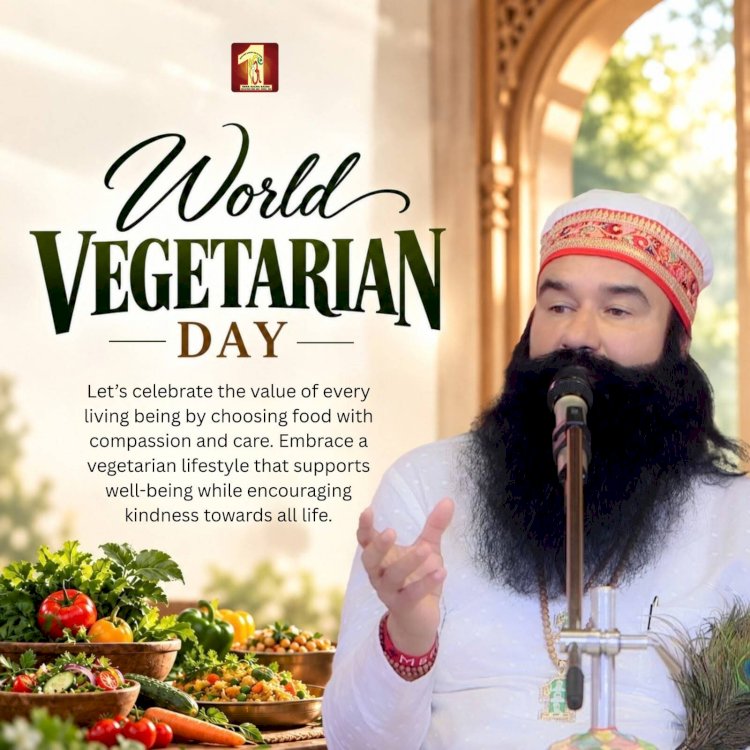
World Vegetarian Day: Rethinking What We Eat for a Healthier, Kinder World
What happens when something placed on our plate every day begins to affect the health of millions?
Across the world, food is no longer just a matter of taste or tradition. It has become increasingly connected with one of humanity’s biggest health challenges.
The evidence is compelling.
The evidence is increasingly difficult to ignore. The World Health Organization’s cancer agency, the International Agency for Research on Cancer (IARC), classifies processed meat as carcinogenic to humans and meat as probably carcinogenic, with the strongest evidence linking both to colorectal cancer.
The global impact is significant: colorectal cancer is the world’s third most common cancer, with around 1.9 million new cases and more than 900,000 deaths in 2022. IARC’s 2025 colorectal-cancer awareness campaign highlighted the continuing global concern, including rising incidence among younger people.
And the concern extends beyond cancer. WHO also associates high consumption of non-vegeterian meals with increased risks of cardiovascular disease and type 2 diabetes.
The Health Crisis Behind the Plate
The world is not merely fighting diseases; it is fighting the dietary patterns that can help fuel them.
From heart disease and metabolic disorders to obesity and other diet-related chronic conditions, the global health burden is immense. While no single food is responsible for every illness, growing evidence continues to underline the importance of dietary patterns built around vegetables, fruits, legumes, whole grains, nuts and other nutrient-rich plant foods.
Can the way we nourish our bodies also become a way of protecting them?
For years, Revered Saint Dr. Gurmeet Ram Rahim Singh Ji Insan has been giving a simple answer through His Divine Sermons: choose vegetarian food, not only for the nourishment of the body, but also out of compassion for living beings.
His Holiness’s message invites humanity to look beyond taste, to consider health, life and compassion before making a choice about what goes on the plate.
He explains that if a living being experiences pain, fear and suffering, satisfying our taste buds at the cost of that life raises a deeper moral question.
If we cannot bear that suffering ourselves, why should we cause it to another living being of the Almighty?
The New Equation of Strength: Nutrition, Not Meat
One enduring misconception is that strength, stamina and muscle development must come from meat or eggs. Revered Guru Ji challenges this belief through powerful examples from nature, elephants, rhinoceroses, horses, camels and kangaroos, reminding us that extraordinary strength does not belong exclusively to an animal-based plate.
And nutrition tells a similar story.
Lentils, chickpeas, beans, peas, soy, nuts, seeds and dairy foods can provide substantial amounts of protein, while many plant foods also bring something particularly valuable to the plate: dietary fibre, vitamins, minerals and beneficial plant compounds. WHO recommends a varied diet rich in vegetables, fruits, legumes, whole grains and nuts, and notes that shifting towards more plant-based sources of protein can bring health benefits, particularly when replacing red meat.
“How much protein does this food actually contain?”
|
Vegetarian Food |
Protein |
Non-Vegetarian Food |
Protein |
|
Soybeans |
~38–40% |
Chicken |
~22–24% |
|
Peanuts |
~25–26% |
Fish |
~20–22% |
|
Lentils / Pulses |
~20–25% |
Beef |
~19–20% |
|
Chickpeas |
~19–21% |
Eggs |
~12–13% |
Strength and Nourishment does not have to require killing.
One’s meal can provide protein, energy and nourishment, while also reflecting a conscious choice to respect life.
Beyond Meat: Rethinking What Makes Us Strong
For the student, it can mean wholesome food that fuels concentration, learning and an active day.
For the athlete, it can mean purposeful nutrition: combining protein-rich foods, sufficient energy and variety to support training, recovery and performance.
Revered Guru Ji takes this concern far beyond food; to the very nature of the human mind.
Imagine standing before a living being as its life is taken; watching its fear, its struggle, its blood being shed. Would such a sight fill the heart with peace? Would it awaken contentment, serenity or love?
Or would it awaken something entirely different?
What we repeatedly accept, we can eventually begin to normalise. What we normalise can shape our thoughts. And what takes root in our thoughts can influence the way we behave.
If a human being can learn to overlook the pain of another living creature simply to satisfy their taste buds, where does that journey of desensitisation end?
For Revered Guru Ji, vegetarianism is therefore not merely about what is placed on one’s plate; it is about what is cultivated in the heart.
If we wish to see less cruelty in the world, should we not begin by refusing to cultivate cruelty within ourselves?
Because a compassionate world cannot be built by hearts that have forgotten how to feel.
What does Science say?
Science does not tell us that one food alone determines our health. It tells us something more important: the pattern of what we eat matters. Diets rich in vegetables, fruits, legumes, whole grains and nuts are at the heart of healthy eating, while higher consumption of red and processed meat is associated with increased risks of several major diseases. In a world confronting disease, rising lifestyle-related health burdens and an urgent need for greater compassion, the humble vegetarian plate offers a simple possibility: to nourish ourselves while choosing not to turn another living being’s suffering into our satisfaction.
That does not mean every vegetarian meal is automatically healthy, nor that every animal-derived food carries the same risk. It means that a thoughtfully planned vegetarian diet can provide the protein and nutrients the body needs while placing whole, plant-based foods at the centre of the plate.
And perhaps that is the most powerful message of all.
A stronger body does not require a harder heart.
Because when nourishment meets compassion, our food becomes a humanly and wiser choice.
A choice for health.
A choice for life.
A choice for humanity.
Latest Posts
-

-
-

-

Mental health is an essential part of human well-being. It influences how we think,...
-
-
From heart disease and metabolic disorders to obesity and other diet-related chronic...
-
Inspired by the 176 humanitarian welfare works initiated by Revered Saint Dr. MSG...
-
In 2007, as millions of devotees prepared to celebrate the sacred Incarnation Day...
-

Today, more than 56,000 devotees have pledged to donate their kidneys/organs, with...
-

Youth is the most powerful chapter of life; an age of dreams without limits, energy...